
Our Cataract Surgery Services
At Vision North Eye Centre, we provide leading-edge cataract surgery and treatment options to improve sight and quality of life.
Cataracts are a common age-related condition where the natural lens of the eye becomes cloudy, causing blurry vision, glare, and difficulty with daily activities. Cataract surgery is a safe and highly effective procedure that restores clear vision by removing the cloudy lens and replacing it with a clear, artificial lens implant. This procedure not only improves sight but also enhances quality of life, helping patients regain independence and confidence in their everyday routines.
Sharper and Clearer Vision
Cataracts gradually cause vision to become blurry, hazy, and dull, making it difficult to focus on objects or see fine details. By removing the cloudy lens and replacing it with a clear artificial one, cataract surgery restores sharpness and clarity, allowing patients to once again enjoy crisp, detailed vision. Whether it’s reading a book, watching television, or recognizing a loved one’s face, this improvement can feel like seeing the world in high definition.
Reduced Glare and Halos
Cataracts often scatter light as it enters the eye, leading to uncomfortable glare, halos around lights, and difficulty with night driving. After surgery, patients typically notice a reduction in these visual disturbances. Headlights, streetlights, and bright environments become more comfortable to navigate, improving safety and confidence, particularly in low-light conditions.
Greater Independence in Daily Activities
When vision is impaired by cataracts, simple daily tasks like cooking, reading a menu, or enjoying hobbies can become challenging. Cataract surgery gives patients back the ability to perform these activities without constant frustration or reliance on others. Restored vision means more freedom and independence, which is especially valuable for maintaining an active, fulfilling lifestyle.
What to expect during surgery
Cataract Surgery Procedures
Cataract surgery is typically completed in less than 30 minutes and performed on an outpatient basis at Kysen Regional Hospital in Terrace.
Preparation & Anesthesia
Once you have checked in, the nurse will offer you some medication such as an Ativan tablet to help you relax. The eye is numbed with drops and you will be positioned under a microscope. You will be asked to look towards a light but will not see any details of the procedure.
Lens Removal
A small, painless incision is made in the cornea and the cloudy cataract is then removed by an ultrasound device.
Lens Replacement
A clear intraocular lens (IOL) is inserted and the surgery is complete. Your vision will be blurry at first, but most patients notice an improvement in vision within days with minimal downtime.
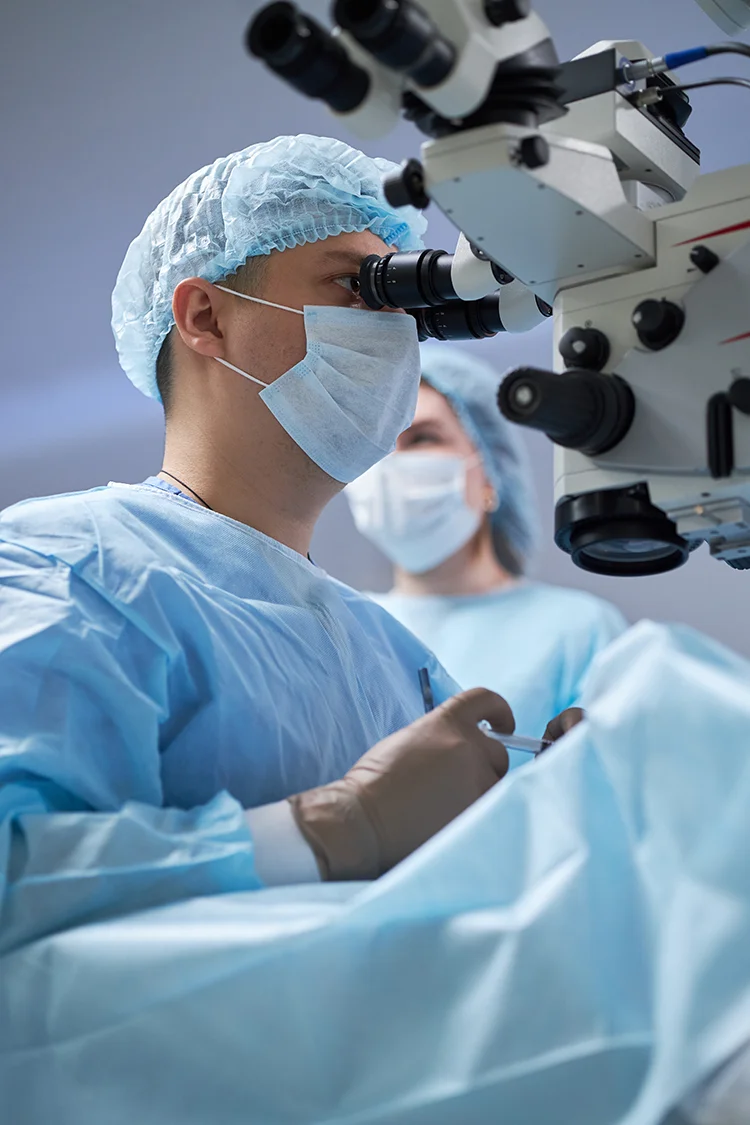
Offering comprehensive surgical treatment options for Northern BC
Adjunctive Procedures for Cataract Surgery
In some cases, additional treatments may be performed alongside or after cataract surgery to maximize results:
Astigmatism Correction
Placement of toric lenses or limbal relaxing incisions help improve visual clarity with less need for glasses.
Posterior Capsulotomy (YAG Laser)
A simple laser procedure used if clouding develops on the lens capsule months or years after surgery.
Combined Cataract and Glaucoma Surgery
For patients with both conditions, surgery can be combined to improve vision and manage eye pressure simultaneously.
Refractive Lens Exchange (RLE)
Similar to cataract surgery but performed before significant cataract development, offering patients reduced dependence on glasses.
Frequently Asked Questions
Have Questions Regarding Cataracts and Cataract Surgery?
A cataract is a clouding of the natural lens inside the eye, causing blurry vision, glare, and light sensitivity.
Patients whose cataracts significantly affect daily activities such as reading, driving, or enjoying hobbies. If glasses improve your vision sufficiently, you may be able to defer surgery.
The procedure is performed under local anesthesia with minimal discomfort. A mild pressure sensation may be experienced.
Typically 10–20 minutes.
That depends on the type of intraocular lens chosen. Premium lenses are designed to reduce the need for glasses, but they are still helpful in some situations such as reading fine print.
You should avoid heavy lifting or strenuous activity for 1-2 weeks after surgery. There may be mild discomfort from dryness of the eye which will improve with the help of post-operative eye drops you will use for approximately 4 weeks. Most patients can resume light activities immediately and regular activities within weeks.
No. Surgeries are typically spaced 1-2 weeks apart. If you have concerns about the timing between the two surgeries, our scheduling department will work with you to find something that works.
Yes. There are risks with cataract surgery, but It is one of the safest and most common surgical procedures worldwide, with high success rates.
We will review the risks in more detail during your consultation. There is a 0.1% chance of a serious complication such as an infection, bleeding, or a retinal detachment.
When vision loss interferes with daily activities and affects your quality of life and glasses are no longer meeting your vision needs.
The lens implant is designed to last a lifetime and does not wear out.
Cataract surgery, along with biometry scans and the standard lens implant, can be 100% covered by MSP. You have the option to upgrade your lens implant or biometry scans for an extra cost not covered by MSP, though some 3rd party insurances may offer coverage.